Anukriti

काँच ही बाँस के बहँगिया

Kanch Hi Baans Ke Bahangiya Meaning: Four Days at the River

«काँच ही बाँस के बहँगिया» (kā̃c hī bā̃s ke bahãgiyā) means “a carrying pole of green bamboo.” It is the opening line of a much-loved Chhath folk song, in Bhojpuri. Anukriti’s song keeps that line, and gives each of Chhath’s four days a verse of its own: the bath, the one meal, the setting sun, the rising sun.

Chhath Puja · A song in Bhojpuri · Anukriti’s 90-second reel

Chhath · काँच ही बाँस के बहँगिया

The reel opens on a walk to the river. Women in red and yellow saris go down the steps of a ghat in the early light, a brass lota in hand. Chhath begins at the water, and every day of it returns there.

The name means “sixth”: छठ is the spoken form of षष्ठी, Shashthi. The festival falls on the sixth day after Diwali, in the month of Kartik, and lasts four days. Its home is Bihar, Jharkhand and eastern Uttar Pradesh, and across the border, parts of Nepal. Families from there keep it wherever they live now.

Chhath needs no priest, no temple and no idol. The one who keeps the fast leads the worship, most often a woman, sometimes a man. The offerings go to the Sun, Suruj Dev in the song, and to Chhathi Maiya. There is no one book. The rites are passed down the way this song is: by women, by ear, in songs in Bhojpuri and Maithili.

That is why a Chhath song can work as a guide. Anukriti’s song walks through the festival in order, one verse a day. Here it is, verse by verse.


The refrain · sung between the days

काँच ही बाँस के बहँगिया, घाटे घाटे जाय
बाँस के बहँगी कान्हे पर, छठी मइया के दुआर

kaanch hi baans ke bahangiya, ghaate ghaate jaay
baans ke bahangi kaanhe par, Chhathi Maiya ke duaar

A carrying pole of green bamboo goes from ghat to ghat. The bamboo pole on the shoulder, to Chhathi Maiya’s door.

A बहँगी is a shoulder pole with a basket hanging from each end. काँच means fresh and green: bamboo cut new, not yet seasoned. The offerings ride to the river on it, and the refrain comes back between the days, the way the walk to the ghat does.


Day 1 of 4 · नहाय-खाय, Nahay-Khay

Bathe, Then Eat

The first day is named for what happens on it. The one keeping the vow takes a dip in the river at dawn, and then eats one meal, cooked without onion or garlic.

Verse 1

नहाय खाय के भोरवा, गंगा जी में नहाईं
कद्दू भात, चना के दाल, सुरुज देव के भोग लगाईं

nahay-khay ke bhorwa, Ganga ji mein nahaain
kaddu-bhaat, chana ke daal, Suruj Dev ke bhog lagaain

At dawn on Nahay-Khay, we bathe in the Ganga. Gourd and rice, chana dal: offered as bhog to Suruj Dev.

कद्दू भात is rice with bottle gourd, the meal of the day. भोग लगाईं means it is offered before anyone eats: the first plate goes to the Sun.
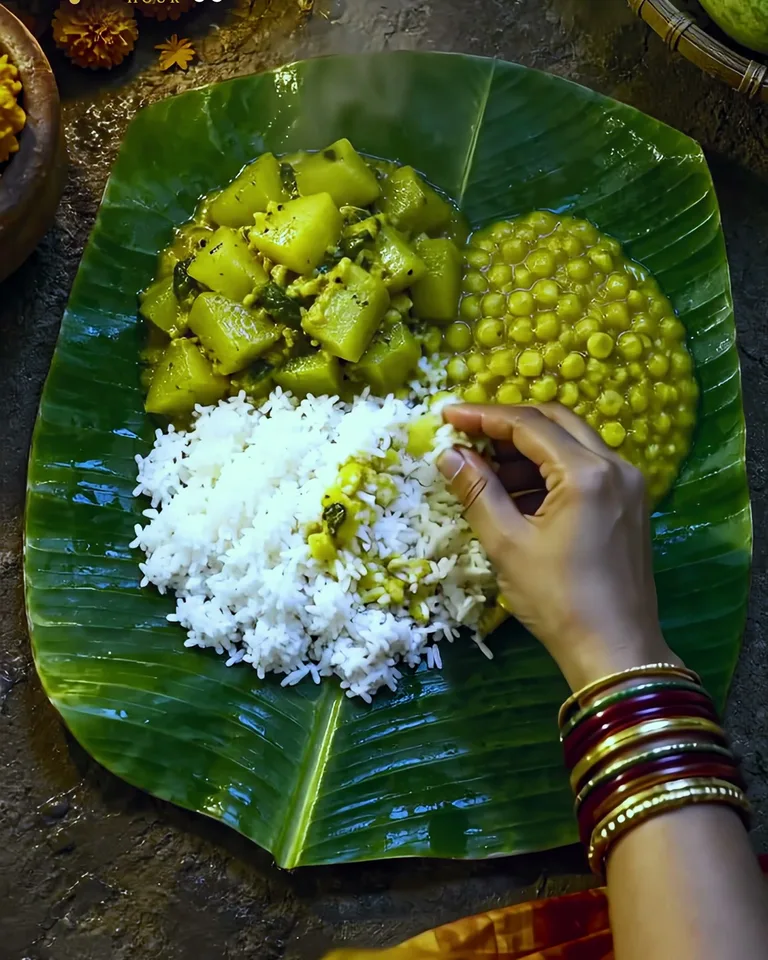
From above: a hand in red and gold bangles sets out rice, gourd and chana dal on a green banana leaf

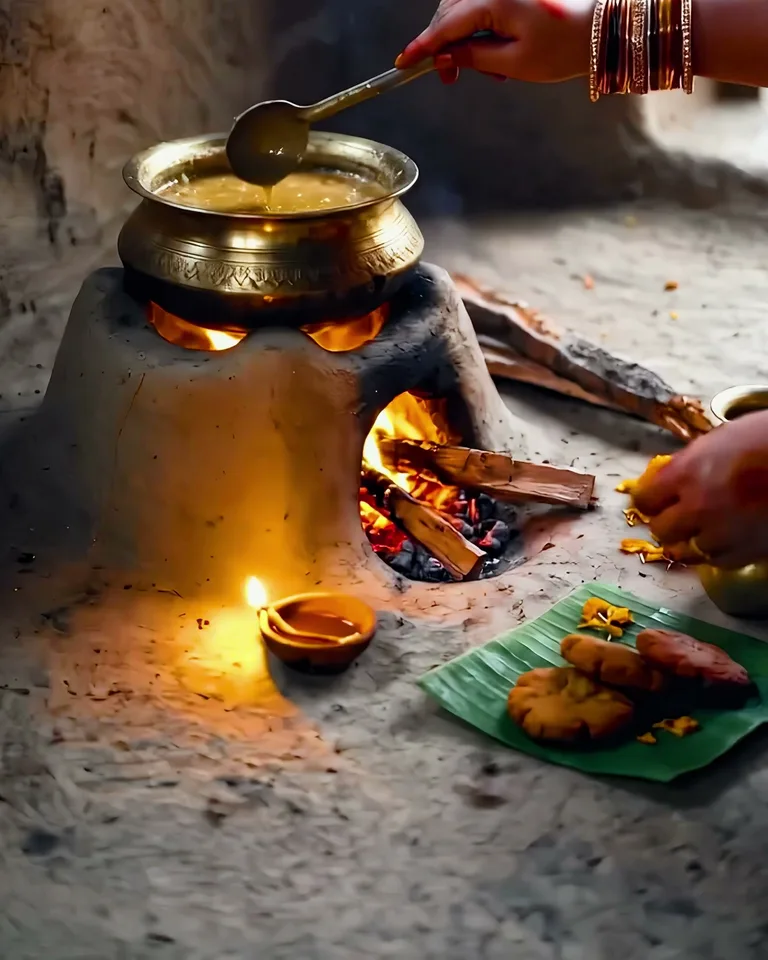
A brass pot of kheer on a clay stove with a wood fire, a clay lamp and thekua on a leaf beside it

Day 2 of 4 · खरना, Kharna

One Meal, as the Light Goes

On the second day the fast lasts until sunset. Then comes a single meal of kheer sweetened with jaggery, with puris and bananas, shared with the neighbours.

Verse 2

खरना के साँझ भइल, गुड़ के खीर बनाईं
निरजल बरत धइलीं, छठी मइया के ध्याईं

kharna ke saanjh bhail, gud ke kheer banaain
nirjal barat dhaili, Chhathi Maiya ke dhyaain

Kharna evening has come; we make kheer with jaggery. We have taken up the fast without water, our minds on Chhathi Maiya.

निरजल बरत is the waterless vow. After the Kharna meal there is nothing, no food and not a sip of water, for about 36 hours, until the offering to the rising sun on the fourth morning.

Chhath, from start to finish

The Four Days

In 2026 the evening arghya is on Sunday 15 November in India, so the four days run from Friday 13 to Monday 16 November.

Day 3 of 4 · संध्या अर्घ्य, the evening offering

Facing the Sun That Is Leaving

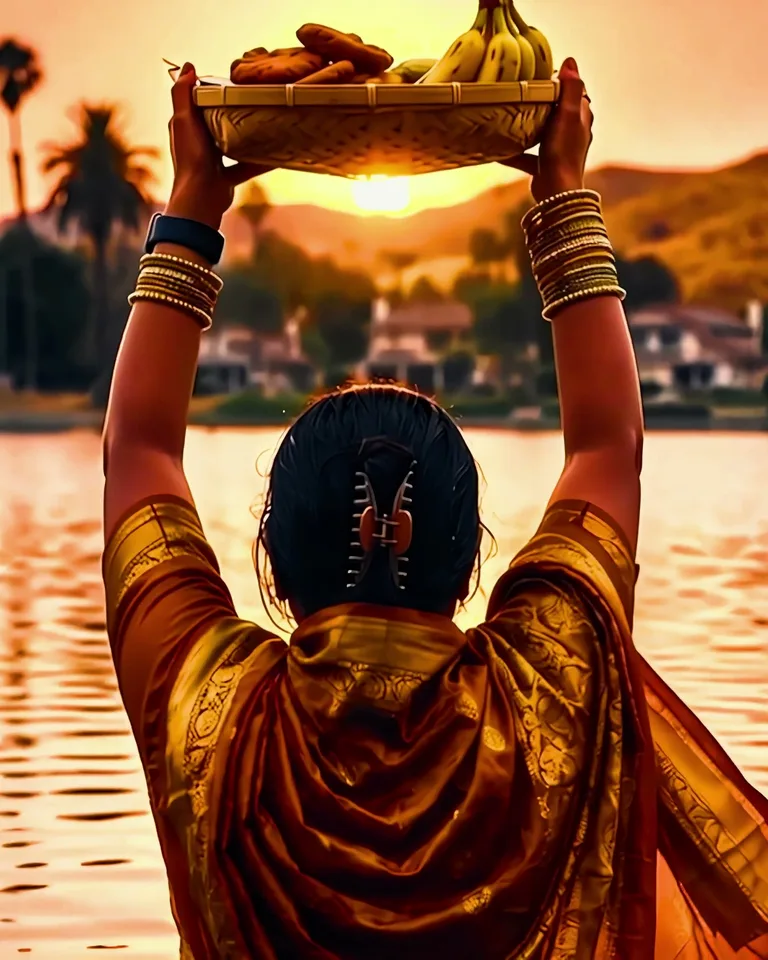
On the third evening the whole family walks with the one keeping the vow to the water, the offerings carried in baskets. She steps in and stands facing west. As the sun goes down she lifts the soop, the bamboo tray of offerings, toward it: the first arghya.

Verse 3

डूबत सुरुज के अरघ, घाटे ठाढ़ होके
सूप में ठेकुआ, केरा, दियरा जरे घाटे घाट

doobat Suruj ke aragh, ghaate thaadh hoke
soop mein thekua, kera, diyara jare ghaate-ghaat

The offering to the setting sun, standing at the ghat. Thekua and bananas in the soop; lamps burn from ghat to ghat.

Listen for two words in this verse: डूबत सुरुज, the setting sun. Few festivals begin their offerings at sunset. Chhath does. ठेकुआ, thekua, is a hard sweet of wheat and jaggery, made at home; केरा is the Bhojpuri word for banana.

Seen from behind: a woman in a gold-bordered sari stands in the river and lifts a bamboo tray of thekua and bananas toward the setting sun

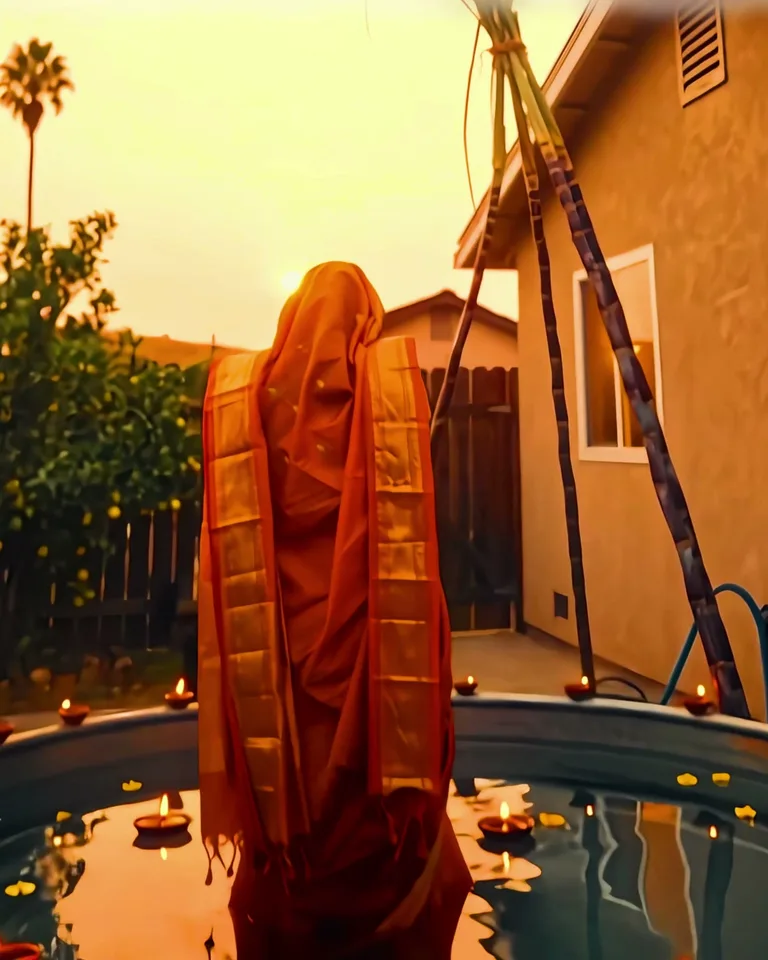
Seen from behind at sunset: a woman in an orange sari stands in a small round pool in a suburban backyard, sugarcane stalks and clay lamps around its rim

Inside the reel · Bihar, and Los Angeles

One River, Every River

The reel cuts between two evenings. One is a ghat in Bihar. The other is a backyard in Los Angeles, where the river is a small round pool ringed with lamps and sugarcane. The sun is the same one.

Families abroad keep Chhath at whatever water is near. On the Potomac outside Washington, one couple began the celebrations in a small way in 2006, and by 2022 they drew several hundred people. In New Jersey it is kept in a park. In Connecticut, one year, it was kept in a makeshift pool.

That is the line the reel’s caption sends on: to the one who keeps the vrat in your family, wherever the water is.


The night between · and the blessing

राति भर कोसी भराईं, अँगना में दियरा बारीं
ॐ घृणिः सूर्याय नमः

raati bhar kosi bharaain, angana mein diyara baarin
om ghṛṇiḥ sūryāya namaḥ

All night we fill the kosi; we light lamps in the courtyard. Salutation to the radiant Sun.

Between the two offerings the song turns quiet and stays at home, with the lamps. Then it gives its blessing: जे केहू छठ के बरत करे, ओकर अँगना भरल रहे, “whoever keeps the Chhath vow, may their courtyard stay full.”


Kanch Hi Baans Ke Bahangiya Lyrics, with Meaning

Refrain

काँच ही बाँस के बहँगिया, घाटे घाटे जाय

Kaanch hi baans ke bahangiya, ghaate ghaate jaay

A carrying pole of green bamboo goes from ghat to ghat

बाँस के बहँगी कान्हे पर, छठी मइया के दुआर

Baans ke bahangi kaanhe par, Chhathi Maiya ke duaar

The bamboo pole on the shoulder, to Chhathi Maiya’s door

Day 1 · Nahay-Khay

नहाय खाय के भोरवा, गंगा जी में नहाईं

Nahay-khay ke bhorwa, Ganga ji mein nahaain

At dawn on Nahay-Khay, we bathe in the Ganga

कद्दू भात, चना के दाल, सुरुज देव के भोग लगाईं

Kaddu-bhaat, chana ke daal, Suruj Dev ke bhog lagaain

Gourd and rice, chana dal: offered as bhog to Suruj Dev

Day 2 · Kharna

खरना के साँझ भइल, गुड़ के खीर बनाईं

Kharna ke saanjh bhail, gud ke kheer banaain

Kharna evening has come; we make kheer with jaggery

निरजल बरत धइलीं, छठी मइया के ध्याईं

Nirjal barat dhaili, Chhathi Maiya ke dhyaain

We have taken up the fast without water, our minds on Chhathi Maiya

Day 3 · The setting sun

डूबत सुरुज के अरघ, घाटे ठाढ़ होके

Doobat Suruj ke aragh, ghaate thaadh hoke

The offering to the setting sun, standing at the ghat

सूप में ठेकुआ, केरा, दियरा जरे घाटे घाट

Soop mein thekua, kera, diyara jare ghaate-ghaat

Thekua and bananas in the soop; lamps burn from ghat to ghat

Day 4 · The rising sun

भोरे भोरे पानी में, जोड़ीं दूनो हाथ

Bhore-bhore paani mein, jodin doono haath

Before first light, in the water, both hands joined

दरसन दीं सुरुज देव, अरघ के समइया भइल

Darsan deen Suruj Dev, aragh ke samaiya bhail

Grant us darshan, Suruj Dev; the hour of the offering has come

उगत सुरुज के अरघ, संगे पारन होई

Ugat Suruj ke aragh, sange paaran hoi

The offering to the rising sun; then the fast is broken together

The night between

राति भर कोसी भराईं, अँगना में दियरा बारीं

Raati bhar kosi bharaain, angana mein diyara baarin

All night we fill the kosi; we light lamps in the courtyard

ॐ घृणिः सूर्याय नमः

Om Ghrinih Suryaya Namah

Salutation to the radiant Sun

Blessing

जे केहू छठ के बरत करे, ओकर अँगना भरल रहे

Je kehu Chhath ke barat kare, okar angana bharal rahe

Whoever keeps the Chhath vow, may their courtyard stay full

छठी मइया के किरपा से, घर परिवार सुखी रहे

Chhathi Maiya ke kirpa se, ghar-parivar sukhi rahe

By Chhathi Maiya’s grace, may home and family be happy

जय छठी मइया

Jai Chhathi Maiya

Glory to Chhathi Maiya

The lyrics are Anukriti’s song as it is sung, in Bhojpuri. The refrain comes back between the days, and the song closes on it and on जय छठी मइया. The opening line is the traditional one.

Questions on Chhath and the Song

What does “Kanch Hi Baans Ke Bahangiya” mean?

“A carrying pole of green bamboo.” काँच is fresh, green, not yet seasoned; बाँस is bamboo; बहँगिया is a fond form of बहँगी, the pole carried across the shoulder with a basket hanging from each end. The line answers itself: घाटे घाटे जाय, “it goes from ghat to ghat”. In the song, the pole carries the offerings to the river, to Chhathi Maiya’s door.

Is Kanch Hi Baans Ke Bahangiya a traditional song?

Its opening line is. It begins a traditional Chhath folk song, and recorded versions of that song credit the lyric as traditional. Anukriti’s song keeps that line and sets its own tune and its own verses, one for each of the four days, in Bhojpuri.

What is Chhath Puja, and why is it called Chhath?

Chhath is a four-day festival of offerings to the Sun. The name comes from षष्ठी, Shashthi, “the sixth”: it falls on the sixth day after Diwali, in the month of Kartik. It is kept mainly in Bihar, Jharkhand, eastern Uttar Pradesh and parts of Nepal, and by families from there all over the world. Water and light are offered to the setting sun on the third day and to the rising sun on the fourth.

Who is Chhathi Maiya?

The goddess of Chhath, “the Mother of the Sixth”. Many know her as Usha, the dawn; the Government of India’s festival note says she is known as Usha in the Vedas. Families pray to her for their children’s health and long life. Accounts of who she is differ, and the festival does not settle the question: it needs no idol of her.

What is Kharna?

The second day of Chhath. The one keeping the vow fasts all day. After sunset comes a single meal: kheer made with jaggery (गुड़ के खीर), with puris and bananas, shared with neighbours. Then the long fast begins, with no food and no water, until the dawn offering two days later.

How long is the Chhath fast?

About 36 hours, with no food and not a sip of water: from the Kharna meal after sunset on day two to the offering to the rising sun on day four. The exact length depends on the times of sunset and sunrise. The song names it निरजल बरत, the waterless vow.

Why is an arghya offered to the setting sun at Chhath?

Chhath begins its offerings at sunset, which few festivals do. On the third evening the one keeping the vow stands in the water facing the sun as it goes down and lifts the soop, the bamboo tray of offerings, toward it: the sandhya arghya. The next morning, before first light, they are back in the water, facing east, for the usha arghya. Readings of the two differ; one study of the festival calls the morning arghya thanks for the harvest, and the evening one an offering for the Sun’s goodwill.

When is Chhath Puja in 2026?

In India the evening arghya, the main day, is on Sunday 15 November 2026 (Drik Panchang, New Delhi). So Nahay-Khay falls on Friday 13 November, Kharna on Saturday 14 November, and the dawn arghya and the breaking of the fast on Monday 16 November. Abroad the dates can shift by a day with the lunar day; check a panchang for your city.

What is thekua?

A hard sweet of wheat flour and jaggery, made at home for Chhath and offered in the soop with bananas, sugarcane and fruit. The song puts it in the third verse: सूप में ठेकुआ, केरा, thekua and bananas in the soop.

Where can I hear the full song?

The reel on this page is a 90-second cut. The full Kanch Hi Baans Ke Bahangiya, about three and a half minutes with all four days, the night between and the blessing, plays in the Anukriti app on the Devi Shakti radio station, with each line on screen as it is sung.

Sources: Press Information Bureau, Government of India, Chhath Mahaparva: From Riverbanks to World Heritage Status (27 October 2025); G. Badikilaya, “Chhath Puja: A Study in Religious and Cultural Tourism”, Atna Journal of Tourism Studies14(2), 2019; A. Kumar, “Chhath Puja: Mobility, Migration and Modernity”, Outlook (27 October 2025); Sahapedia, Chhath Puja; PTI, “Hundreds of Indian Americans celebrate Chhath at over dozen places in US” (1 November 2022); Drik Panchang, Chhath Puja 2026 (New Delhi).


Day 4 of 4 · उषा अर्घ्य, the dawn offering

भोरे भोरे पानी में, जोड़ीं दूनो हाथ
दरसन दीं सुरुज देव, अरघ के समइया भइल
उगत सुरुज के अरघ, संगे पारन होई

bhore-bhore paani mein, jodin doono haath
darsan deen Suruj Dev, aragh ke samaiya bhail
ugat Suruj ke aragh, sange paaran hoi

Before first light, in the water, both hands joined. Grant us darshan, Suruj Dev; the hour of the offering has come. The offering to the rising sun; then the fast is broken together.

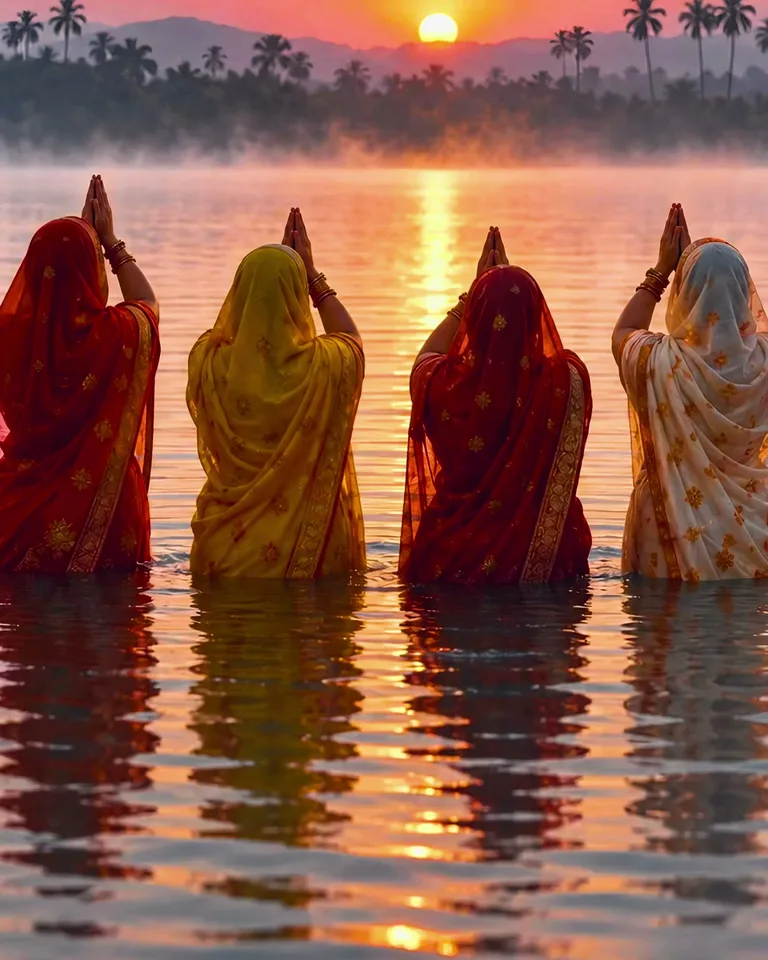
On the last morning they are back in the water before the light, facing east, and wait. उगत सुरुज, the rising sun, answers डूबत सुरुज from the evening before. Only after this second arghya is the fast broken: पारन, kept, and shared. The reel ends on a thekua passed from one pair of hands to another.

Seen from behind at dawn: four women in red, yellow and cream saris stand in the river with hands joined above their heads as the sun rises over palm trees

Stand with the light when it leaves. Be back in the water when it returns. सभी छठ व्रतियों को नमन: a bow to everyone who keeps the Chhath fast. Send this to the one who keeps it in your family.

Sing It
Day by Day

The full Kanch Hi Baans Ke Bahangiya plays in the Anukriti app, on the Devi Shakti radio station, each line on screen as it is sung. Anukriti helps you sing the prayers you grew up hearing, at your own pace, with line-by-line guidance.

New reels from Anukriti on Instagram.
Follow @anukriti.ai

AnukritiDownload on the App Store
Download