వరలక్ష్మిVaralakshmi
the goddess who answers a vow
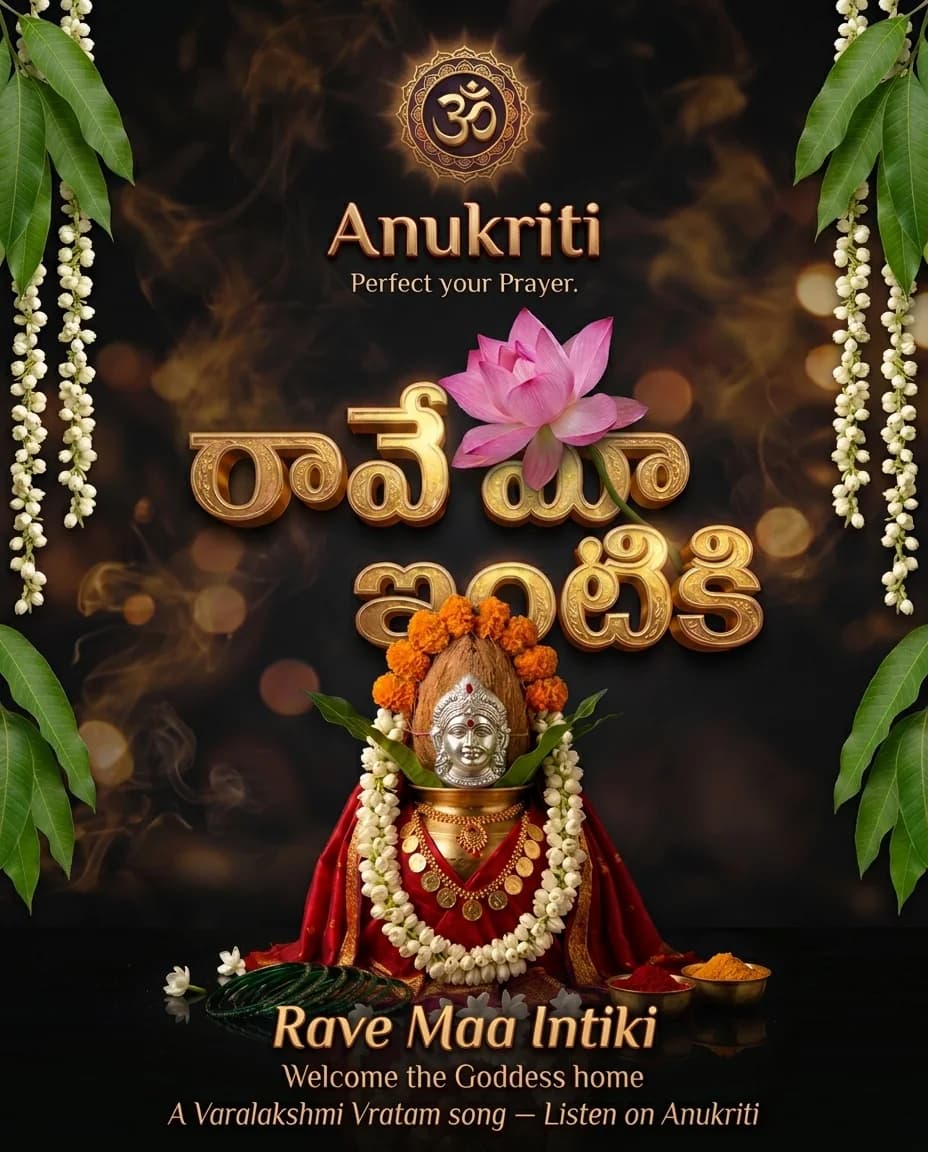
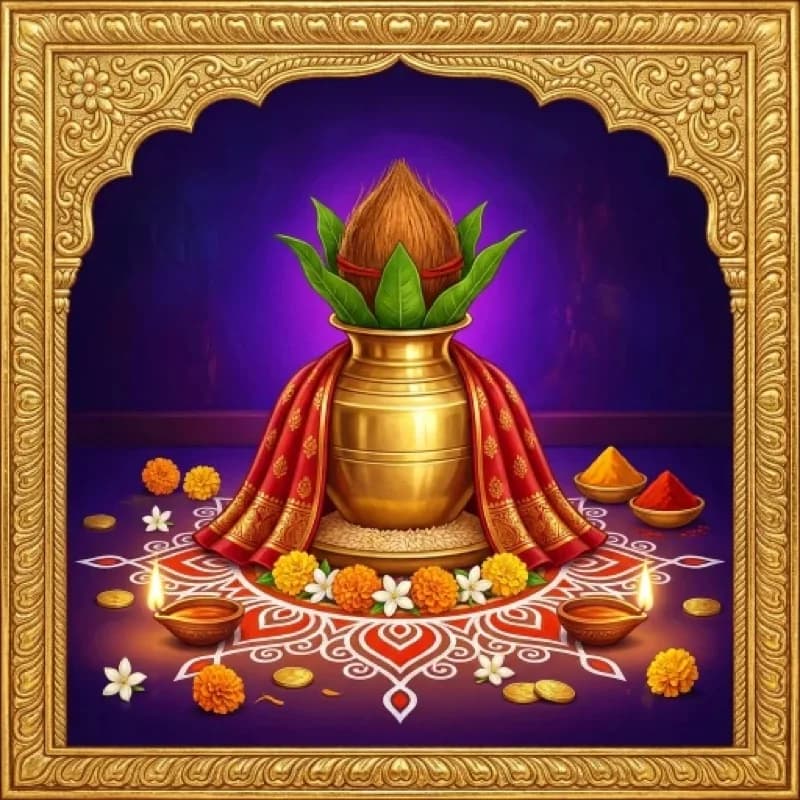
Varalakshmi — the boon-giving form of Lakshmi — is worshipped on the Friday before the Shravana full moon, just ahead of Raksha Bandhan. Married women keep the vratam for a husband’s long life and the household’s prosperity, and the goddess is not represented by an idol. She is a kalasham: a brass pot filled with rice or water, dressed in a silk saree, crowned with mango leaves and a coconut, and given a silver or gold mukham — a face — so she has somewhere to look back at you from. The mango leaves stand for the home being ready to receive her; the coconut, sealed and unbroken, for the abundance still waiting inside.
Which is why the song does not ask her to appear. It asks her to come, the way you would ask someone who already belongs in the house. రావే is the singular, familiar imperative — the form Telugu reserves for a mother, a sister, a daughter. Not a formal “kindly arrive.” రావే. Come.
It is the same intimacy Telugu and Tamil bhakti poets have leaned on for centuries — addressing Krishna or Rama not as a distant sovereign but as a wayward son, a beloved, someone close enough to be scolded, teased, or simply called in from outside. Varalakshmi gets the gentlest version of that address: not a summons, a homecoming.