Anukriti logo
ANUKRITI
Perfect Your Daily Prayer with Anukriti AI
अनिर्वेदः

The Verse Hanuman
Recites When He Fails.

Sundara Kanda, Part II — the meaning of अनिर्वेदः श्रियो मूलम्

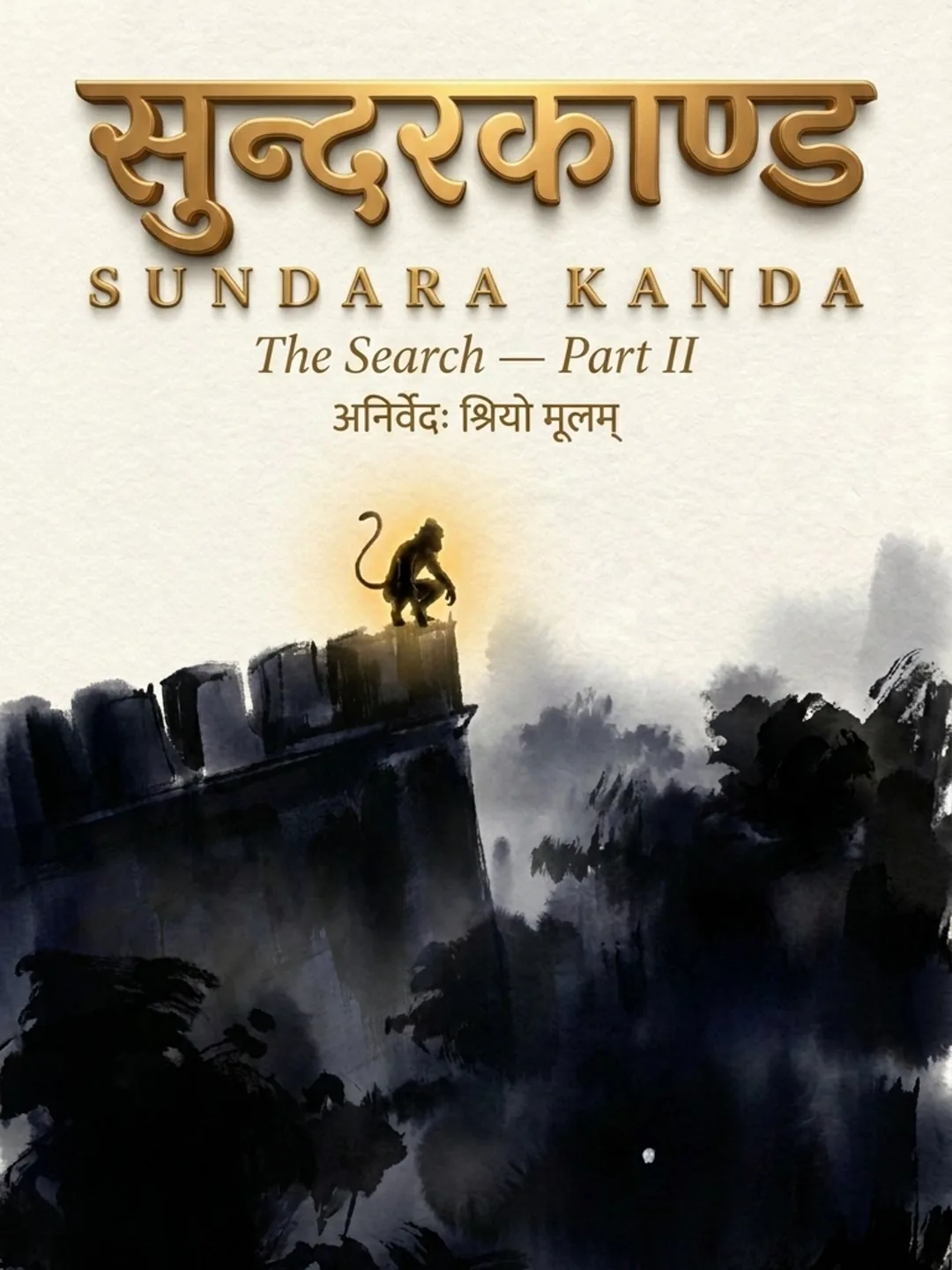
Title card for Anukriti's Sundara Kanda, Part II — an ink-wash silhouette of Hanuman on the wall of Ravana's palace beneath the verse अनिर्वेदः श्रियो मूलम्

Part I of Anukriti’s Sundara Kanda series was the leap — Hanuman clearing an entire ocean in a single bound, an image built for triumph. Part II has no leap in it at all. Hanuman has already crossed into Lanka, shrunk himself down, and spent the whole night going house to house through Ravana’s palace looking for one woman. He finds the Pushpaka chariot. He finds a hall of sleeping women. He finds someone so radiant that, for one instant, he lets himself believe he has found her — then corrects himself: a woman parted from Rama could not sleep this easily, could not wear these ornaments. Not her.

He has searched everywhere. And he breaks. What he says next — quietly, to himself, alone in the enemy’s own palace — is the line people still reach for when nothing is working. It is also the line this reel is built around: a sumi-e ink-wash telling of the night search, sung against a chorus that keeps insisting Sita has been seen, long before Hanuman has actually seen her.

What follows is both things at once — the verses themselves, in Devanagari with transliteration and a line-by-line reading of what they actually say, and the story of how Anukriti told this particular night on screen.


Sundara Kanda 5.11.2 · Valmiki Ramayana

अनिर्वेदः श्रियो मूलम्
अनिर्वेदः परं सुखम्

anirvedaḥ śriyo mūlam, anirvedaḥ paraṁ sukham

Not giving in to despair is the root of fortune. It is the highest joy — the line Hanuman recites to himself, having found nothing.


The Search · Sundara Kanda, sargas 3–11

All Night, No Feat

Sundara Kanda is the fifth book of the Valmiki Ramayana, and its name simply means “the beautiful canto” — sundara, beautiful. Part I of this reel told the famous half: Hanuman’s leap across the ocean to Lanka. Part II tells the half nobody puts on a poster. He crosses the city wall. He shrinks down. He searches Ravana’s own inner apartments, hall after hall, finding nothing that is Sita — only a night that keeps not ending.

The search itself spans nearly a dozen sargas of the original text — Valmiki gives it that much room on purpose. Room enough for the Pushpaka chariot, the sleeping hall, the one woman who almost is her and isn’t, before Hanuman finally gives up on the palace interior and turns toward the one place he hasn’t yet looked: a grove, walled off, still dark.

By the time he has been through the whole palace, Hanuman says it himself: he has seen every woman of Ravana’s court, and Sita is in none of them. His labour has come to nothing. There is no monster to fight here, no wall left to leap. The only obstacle left is the thought that he has failed.
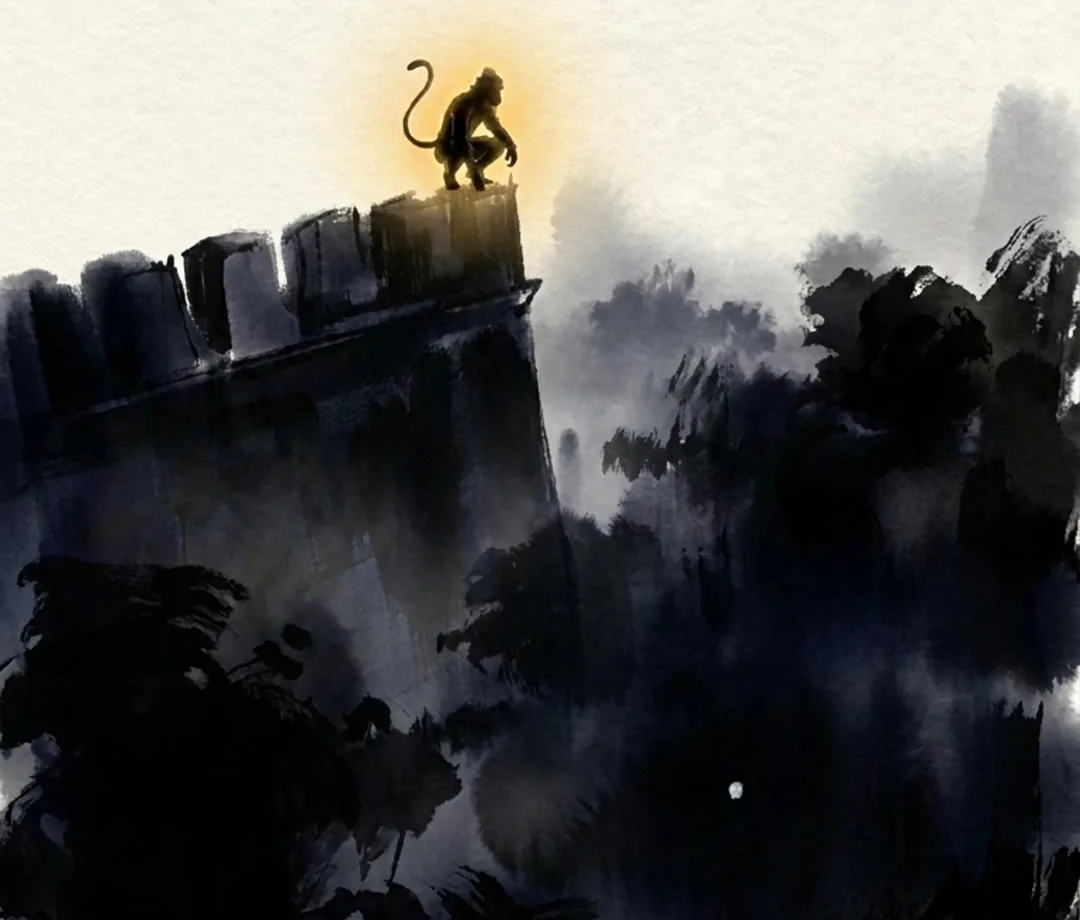
Hanuman crouched on the wall of Ravana's palace at night, an ink-wash silhouette watching over a misty, dark cityscape

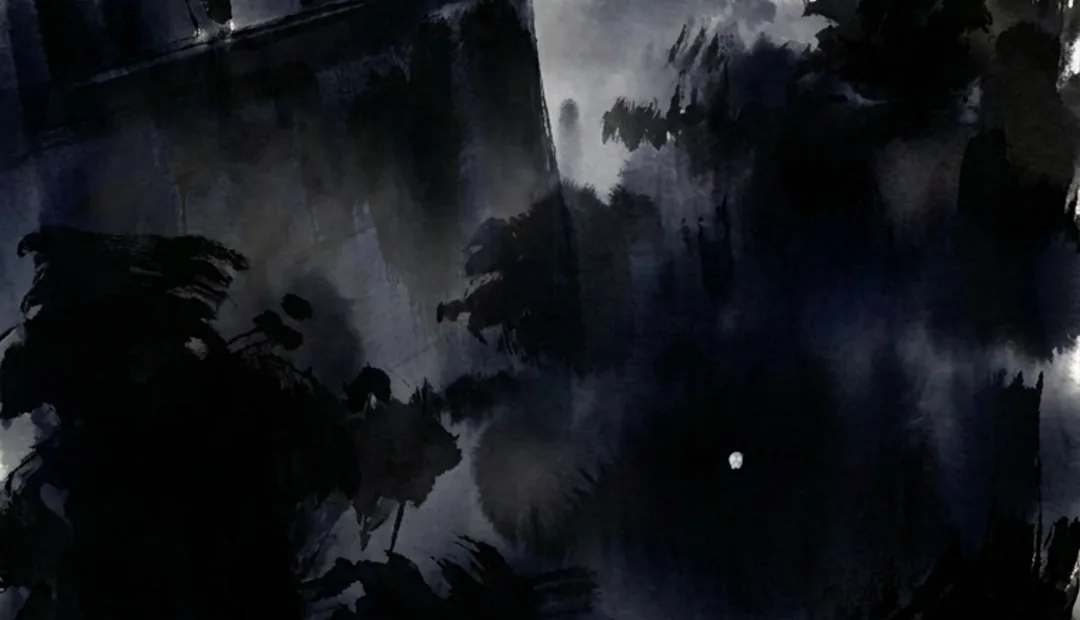
A deep ink-wash rendering of Ravana's palace grounds at night, dark and unresolved, evoking Hanuman's search

The meaning of अनिर्वेदः श्रियो मूलम्

Not Giving In

अनिर्वेदः (anirvedaḥ) is built from a + nir + veda — literally the negation of निर्वेद, the state of giving up, of writing something off as hopeless. Hanuman doesn’t say he feels brave. He says the simple refusal to declare something finished is श्रियः मूलम्, the root of all fortune, and परं सुखम्, the highest joy there is. Not a mood he is waiting to arrive. A position he chooses to hold.

Notice, too, what the verse doesn’t claim. It never says the search will succeed. It says only that the refusal to call it finished is itself the root — मूलम् — of whatever comes next. Fortune isn’t the reward for staying undespondent. Staying undespondent is the fortune.

It is why the verse is still recited today at the exact moment devotees feel like stopping — not as consolation, but as instruction. A few quiet repetitions, right at the point of giving up, aren’t meant to change how you feel. They’re meant to buy one more attempt.


Sundara Kanda 5.12.10–11 · Valmiki Ramayana

विनाशे बहवो दोषा जीवन् प्राप्नोति भद्रकम्
तस्मात्प्राणान्धरिष्यामि ध्रुवो जीवति सङ्गमः

vināśe bahavo doṣā jīvan prāpnoti bhadrakam, tasmāt prāṇān dhariṣyāmi dhruvo jīvati saṅgamaḥ

In destruction lie many faults; the living attain good. Therefore I will hold on to my breath — reunion, for the living, is certain.

Read plainly, it is closer to arithmetic than courage. In destruction there is only more that can go wrong; the living, by contrast, still have a chance at good. Therefore — तस्मात् — he will hold on to his own breath, because reunion is certain only for the living. Hanuman doesn’t talk himself out of grief with hope. He talks himself out of it with logic, one clause following from the last. He has already spiralled — if she is dead, Rama dies, and Lakshmana, and Bharata, and the mothers — and this verse is what stops the spiral: not by denying the fear, but by finishing the sentence it started.


Sundara Kanda is also the one book of the Ramayana most often read on its own, apart from the rest of the epic. A full recitation — a parayana — is traditionally taken up at moments that mirror Hanuman’s own: before a hard exam, a surgery, a court date, a search of any kind that has gone quiet for too long. The logic follows the story. A canto built entirely around one character’s refusal to give up is, unsurprisingly, what people reach for when giving up is exactly the temptation.

Tuesdays and Saturdays are kept as Hanuman’s own days in many households, and the practice scales to whatever time there is — a full reading, a single sarga, or just these two verses, repeated quietly, on the evenings when even opening the book feels like too much. There is no prescribed volume and no minimum fluency required to begin. The tradition treats these lines as usable on their own, lifted out of their sargas, precisely because they were built to be remembered under pressure — the way a phrase learned as a child outlasts almost everything else you were taught alongside it.

Inside the reel · Part II of an ongoing series

The Sound of the Search

The reel is built the way the search feels: a sumi-e ink-wash Lanka, dark washes of a palace and a garden that never quite resolve into daylight, and a single glowing silhouette climbing wall after wall. The only warmth on screen is Hanuman himself, lit like a small lamp against a city that gives nothing back. Nothing in the frame moves quickly. Brushwork bleeds and settles the way ink actually does on wet paper, so the whole night has the unhurried, slightly uncertain quality of a search that doesn’t know yet whether it’s about to end.

Under it runs a chorus — दृष्टा सीता दृष्टा सीता, “Sita has been seen” — sung again and again through the entire search, before Hanuman has seen her at all. It’s the one deliberate irony in the piece: the music keeps promising an ending the picture hasn’t reached yet. A listener who doesn’t know the story could reasonably assume, for most of the reel’s runtime, that the search is already over. It isn’t — that gap between what the chorus claims and what the ink shows is where the tension actually lives.

Only in the closing refrain does the canto’s own name arrive as praise instead — sundara answering sundara, four times over, closing a canto named for beauty with nothing but the word itself, repeated until it stops describing anything in particular and just sits there, being true.

Chorus, sung throughout the search

दृष्टा सीता दृष्टा सीता

dṛṣṭā sītā, dṛṣṭā sītā

“Sita has been seen” — sung before she has been found.

Closing refrain

सुन्दरे सुन्दरो रामः सुन्दरे सुन्दरी कथा
सुन्दरे सुन्दरी सीता सुन्दरे सुन्दरं वनम्

sundare sundaro rāmaḥ, sundare sundarī kathā, sundare sundarī sītā, sundare sundaraṁ vanam

Beautiful is Rama, beautiful is this story; beautiful is Sita, beautiful is the grove.

The Sundara Kanda, Part II title card — Devanagari title over an ink-wash illustration of Hanuman on the palace wall at night

Part I of the series was the leap. Part III, coming next, is the sighting. Of the three, Part II is the one people have carried furthest on their own — proof, maybe, that the failure in the middle of a story is the part that lands. Hanuman finds nothing that night, except the reason to keep looking. Recite it slowly enough, and it becomes yours too.

When You Feel Like
You’ve Found Nothing

Anukriti listens to your chanting and offers expert-level feedback — so every syllable resonates with tradition.

Originally released as Part II of Anukriti’s ongoing Sundara Kanda reel series.
Follow @anukriti.ai

AnukritiFree on the App Store
Download