The language problem · Sundara Kanda, sargas 30–31
The Wrong Voice
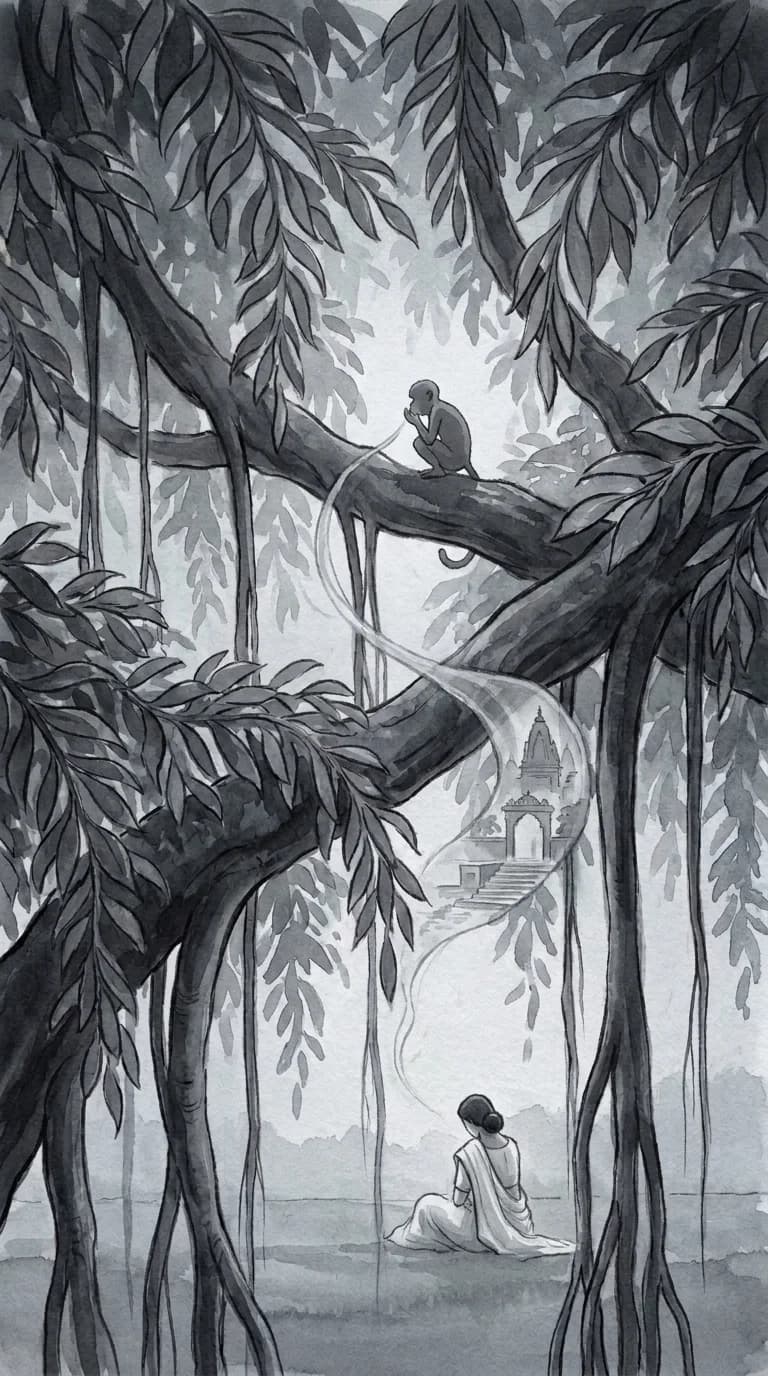
Hanuman’s dilemma, stated plainly in sarga 30, is one of the most self-aware passages in the Ramayana. He is a monkey. He is very small. And if he speaks polished Sanskrit from a tree, Sita will assume he is Ravana trying a new trick. The text does not paraphrase this; it has Hanuman say it out loud, to himself, in the Sanskrit he is worrying about using — a passage aware of its own medium, the character reasoning about the effect of the very language the poet is writing him in.
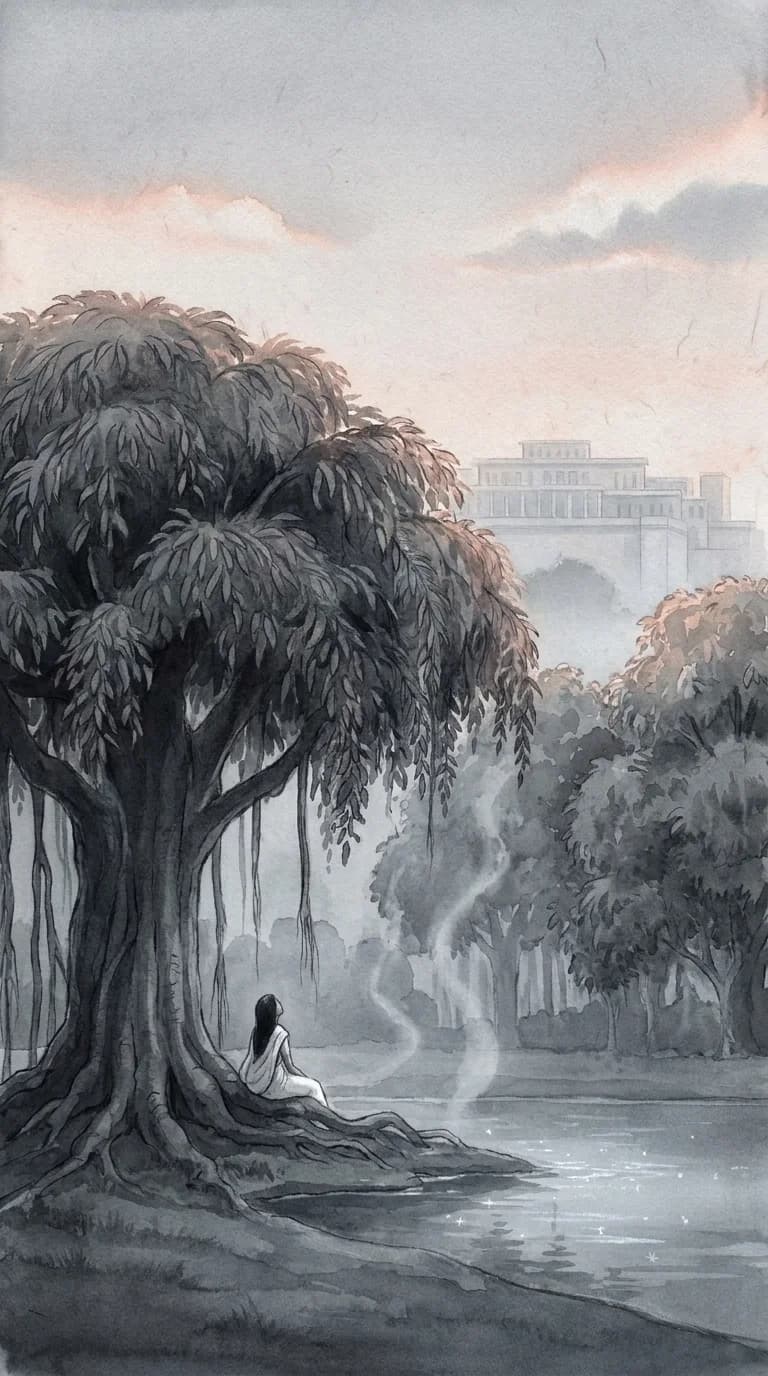
His solution is not to identify himself at all. He begins with a story. राजा दशरथो नाम, he whispers: “a king named Dasharatha.” Not “I am Hanuman.” Not “Rama sent me.” A name she already carries, offered without claim, so she can decide for herself whether the voice is trustworthy. It is credential by narrative rather than declaration, and it works precisely because it asks nothing of her. She listens because the story is already hers.
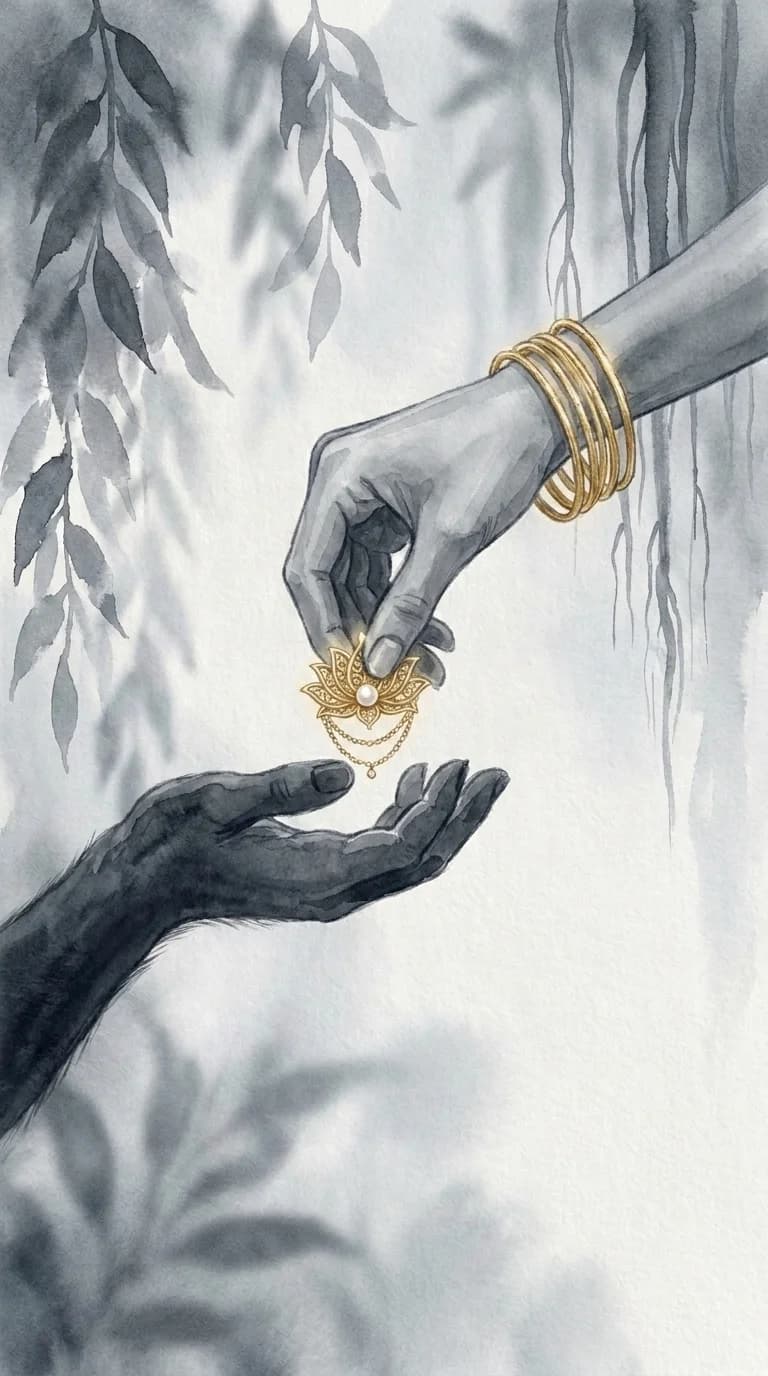
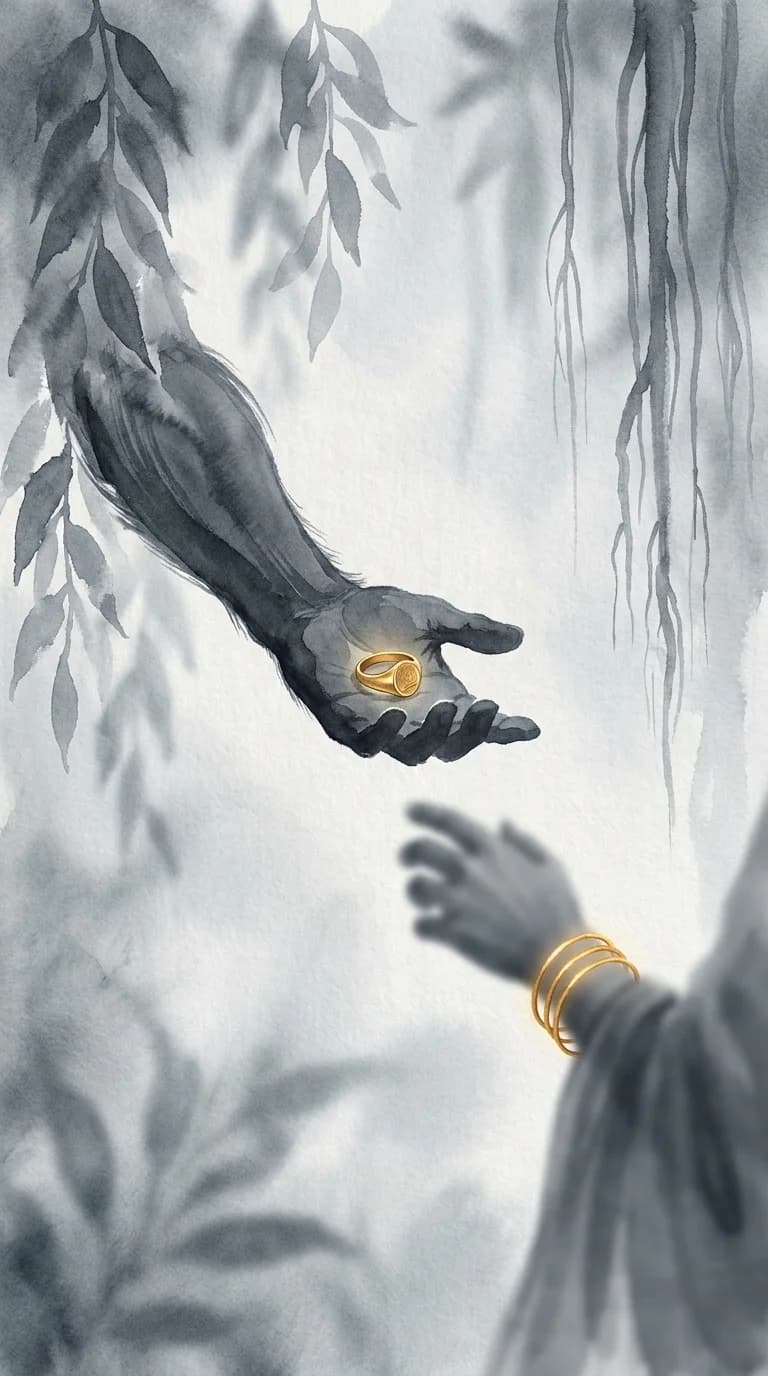
Only after the story has landed — after Dasharatha, after Rama, after she has heard enough to know that whoever is speaking has actually met the man she married — does Hanuman produce the ring. The proof comes second. The story comes first. In a canto built around a leap and a search and a sighting, Part IV’s pivotal act is neither physical nor heroic. It is a monkey choosing to start with the right sentence.